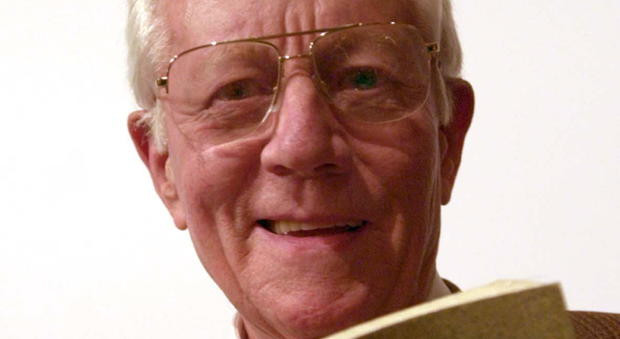
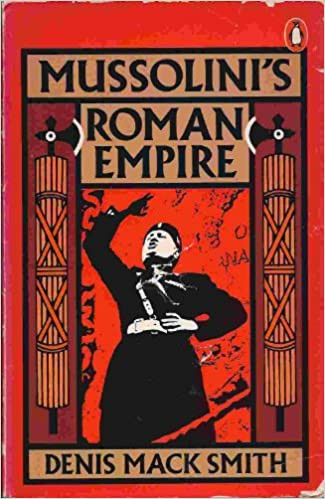
Being congratulated by the expert is gratifying, I was making a programme about a man who led horses against tanks, as he fought Mussolini in the Sahara. Our presenter was Denis Mack Smith – Senior Fellow at All Souls College, Oxford – a world expert of Modern Italian History, he was greatly impressed by the amount of work we had done about the accuracy of the production. “Amazing, you film people do more work than most of our PhD candidates…” I promptly asked for my PhD, which he instantly granted but as yet it has not appeared in the post.
I told Denis when we make programmes for television they have to be accurate, not only because those who commissioned will check before broadcast but often amongst the millions of viewers there will be some who will question, some who will have personal accurate knowledge. Therefore, our statements must be collaborated, hence the concern and care. I asked him where he gained information for his many history books, especially when some of the subjects were then still alive. He said he never interviewed them because you couldn’t trust them; if they had succeeded then the politician or General claimed credit but if failed it was always someone else’s fault.
When asked where his sources originated, he promptly replied “Small ads in newspapers because if it announces, “Giuseppe’s Stores now has blankets”, then the question is why didn’t they have them before, these things you can trust.”
When television was a limited commodity, the editorial content had to be balanced, if 10 economists were of a united opinion but an opponent – no matter how bizarre – was of another view then equal time had to be given to both sides, so the audience would trust the medium. The need for trust extended into advertising, meaning the tricks of making food look better and even the use of paint as cream had to be abandoned, the authorities also policed some moral attitudes. (Some of these controls did lead to some highly creative solutions, which will be part of a later article in this series.) The main effort was so the public have trust in the medium, a trust that is still there in broadcast linear television. Unfortunately, this trust in the moving image has possibly been destroyed with the growth of digital advertising and often its public face “Influencers”.

Much of the money spent by advertisers is to target their message to potential buyers, publications like “What Car?” are perfect for those involved in cars as it is only referenced by those wanting to buy a car. Those wanting to sell frozen peas or shampoo have other problems and the digital advice machine provides figures to help targeting. These advertisers want “Brand Awareness” so as you pass through the shop you recognise their name rather than the four others, especially as there is still an erroneous old attitude that “If it is advertised it must be good” but where to advertise the Times or Woman’s Own? This has led to the entrance of the “Influencers”.
The Influencers, some earning $1 million per post – proudly boast that they can have a campaign running in hours that their advertising is highly targeted but to whom? The most prolific are movie and pop stars, ex-footballers and elaborately made-up 17-year-olds, who will say they use the product at the drop of a wad of cash. Presently, no checks are made about quality but many cheques, hardly a “Which?” deep investigation into properties and effects of a product, more Doris or David uses this. How much trust is that?
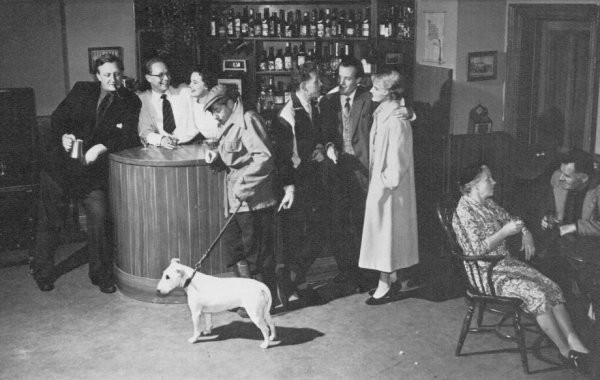
The practice of “influencers” was not invented by digital, in fact in the early 1960s the British film star Jimmy Hanley played a publican in series called “Jim’s Inn”, which combined advertising messages with the plot of a soap opera, where he and his wife Maggie played the hosts of a pub where customers discussed bargains and new products whilst drinking. The series finished when advertising magazine programmes were banned, as it was felt by the regulators that they confused the difference between editorial and advertising that destroyed trust in the medium.
A few years ago, major advertisers staged a joint attack to the digital industry. Pleading with it to get its house in order because it was found that much of the claimed audience was from automated responders, known as “click fraud”. One US advertiser cut their digital budget by 90% and their sales didn’t suffer. At that time Keith Weed – Chief Marketing Officer of Unilever – voiced to Frank Lowe (see News “Being First” Stella Artois story) that he was worried about who was actually seeing their advertising and had advertising lost its charm? Unilever is known for imaginative advertising claiming the seventh spot, Weed’s company according to Statista spent 7.3 billion euros advertising in 2019 worldwide, Unilever makes and sells products under more than 1,000 brand names worldwide from sausages to shampoo, they know that advertising is a capital investment in their brands and were worried about who was actually seeing their advertising.

Yet there is an even bigger problem, Keith Weed expressed as he left Unilever – “We are now at a ‘trust or bust’ moment… but I believe the situation is retrievable. We have the right conditions for whole-system change.” Although he is proud of what advertising helped create – free press and therefore democracy -but what of the future, as increasingly advertising is being blocked and skipped because of trust.
As he is now President of the Advertising Association and a non-Executive Director of WPP –once the world’s largest advertising group – hopefully, he can help restore some trust and even more importantly he can repeat the changes he made within Unilever when back in 2014 he persuaded Unilever to change and go green, way before the current practice of greenwashing. How did he do this? By convincing them that by being green the company would make more money.
Let us all hope that the “Weed Initiatives” will succeed for wider sustainability. Yet we must worry about future historians like Denis Mack Smith. What will they conclude as they trawl through communications from the 2020s, not small ads about blankets but Blogs from Influencers who have just “discovered” the benefits of a product that they clearly know nothing about?
